







Under Criminal Investigation?
State Investigations in Florida and Federal Investigations Nationwide, From a Criminal Defense Attorney With more than 40 Years of Experience
If you are under criminal investigation, you do not have to wait until an arrest to seek legal representation. Many federal cases begin long before anyone is charged, with a phone call, a visit from agents, or a subpoena. Contact Walter A. Reynoso, a criminal defense attorney with more than 40 years of experience, to discuss your situation before responding to law enforcement officers. Early legal guidance can help you understand your position and make informed decisions. Walter A. Reynoso represents clients in state investigations throughout Florida and in federal investigations across the United States.
How Do You Know if You Are Under Criminal Investigation?
An unexpected visit, a telephone call, or a business card left at your home or office may be your first indication of an investigation. Other common signs include:
- Federal agents (for example, from the FBI, IRS Criminal Investigation, HSI, or the DEA) ask to speak with you
- You or your business receive a grand jury subpoena for testimony or records
- You receive a target letter from a federal prosecutor
- A search warrant is executed at your home or business
- Your bank, employer, clients, or business associates tell you law enforcement officers have contacted them
What Should You Do if Law Enforcement Contacts You?
A request to explain what happened can seem informal, but your response may have serious consequences. Statements you make can be used as evidence, and a false or inaccurate statement to a federal agent can become a separate federal crime under 18 U.S.C. § 1001, even if you are never charged in the matter under investigation.
- Stay calm and be courteous.
- Ask for the agent's name, agency, and contact information.
- Do not discuss the facts until you have spoken with a lawyer.
- Do not destroy, alter, or delete documents, messages, or electronic records.
- Do not discuss the investigation with others who may be involved.
Before agreeing to an interview, discuss the request with Walter A. Reynoso. With more than 40 years of criminal defense experience, he can assess the circumstances and advise you on how to respond while protecting your constitutional rights.
Federal Criminal Investigations in Miami
A federal investigation can involve people who have very different roles in the same matter. Law enforcement officers may seek information from witnesses, examine conduct within the scope of an investigation, or focus on someone they believe may face prosecution.
Witness, Subject, or Target: What Is Your Role?
Federal prosecutors generally use three terms, which come from the U.S. Department of Justice Manual:
- Witness: a person who may have information relevant to the investigation.
- Subject: a person whose conduct is within the scope of the grand jury's investigation.
- Target: a person the prosecutor or grand jury has substantial evidence linking to the commission of a crime and who, in the prosecutor's judgment, is a putative defendant.
These roles are not fixed. A witness can become a subject, and a subject can become a target, as an investigation develops. Understanding your position matters. Our office can evaluate the available information and communicate with the prosecutor about your role and the requests you have received.
What Does a Grand Jury Subpoena Mean?
A grand jury subpoena is a formal demand for testimony, documents, or both. Receiving one does not automatically mean that you will be charged with a crime. You may be called as a witness, a subject, or a target of the investigation.
Do not ignore the subpoena. Its requirements, deadlines, and any applicable privileges, including the Fifth Amendment privilege against self-incrimination, need careful review.
Contact Walter A. Reynoso, a criminal defense attorney with more than 40 years of experience, for guidance on responding to a grand jury subpoena.
What Is a Target Letter?
A target letter is a letter from a federal prosecutor informing you that you are a target of a grand jury investigation. It is not a criminal charge, but it is a serious warning. Department of Justice policy encourages prosecutors, in appropriate cases, to notify targets before seeking an indictment so they have an opportunity to testify before the grand jury.
If you have received a target letter, call 305-441-8881 to speak with Walter A. Reynoso, a criminal defense attorney with more than 40 years of experience, before you respond.
Can Your Lawyer Attend Federal Grand Jury Testimony?
Your lawyer generally cannot accompany you inside the federal grand jury room. However, a witness who has retained counsel may have a reasonable opportunity to step outside to consult with that lawyer.
Preparation before testimony is therefore especially important. Our office can review the issues with you and explain the process before your appearance.
Representation for International Clients
An investigation in the United States can also affect foreign nationals who travel here or conduct business here. Distance and language differences can make it harder to understand requests from law enforcement officers and participate in your defense.
Our office works with international clients and their families, maintaining communication throughout the representation and arranging travel when necessary. Our international background helps us understand the practical concerns involved. Walter A. Reynoso is a past president of the Colombian Bar Association, and our office serves clients in both English and Spanish.
Why Clients Choose Walter A. Reynoso
- More than 40 years of criminal defense experience
- Admitted to The Florida Bar in 1985
- Admitted to practice in the U.S. District Courts for the Southern and Middle Districts of Florida
- AV rated by Martindale-Hubbell
- Lifetime member of the National Association of Criminal Defense Lawyers
Frequently Asked Questions About Criminal Investigations
Speak With Walter A. Reynoso
Before Your Next Step
If law enforcement officers have contacted you, or you have received a grand jury subpoena or a target letter, bring your questions to a criminal defense attorney with more than 40 years of experience.
Contact Walter A. Reynoso or call 305-441-8881 to schedule your initial consultation at our Coral Gables office.
Serving Miami, Coral Gables, Miami-Dade County, and Broward County. Hablamos Español.
When Your Future Is at Stake, Experience Matters.
Facing criminal charges can be overwhelming. You deserve an experienced legal team that will protect your rights, fight for your freedom, and guide you through every step of the process.
Contact The Law Offices of Walter A. Reynoso, P.A., today to schedule your initial consultation. Hablamos su idioma.
 Awards & Recognitions
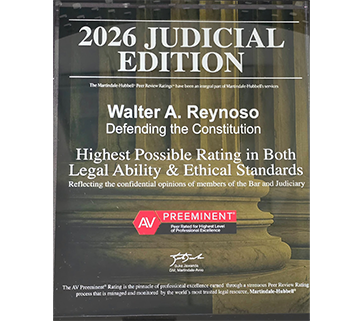
2026 Martindale-Hubbell AV Preeminent Rating
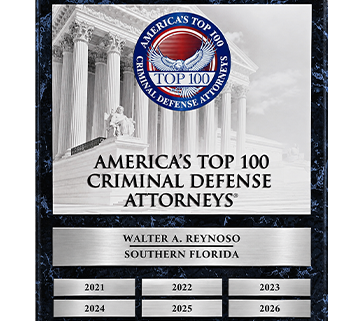
America's Top 100 Criminal Defense Attorneys
2021 - 2026
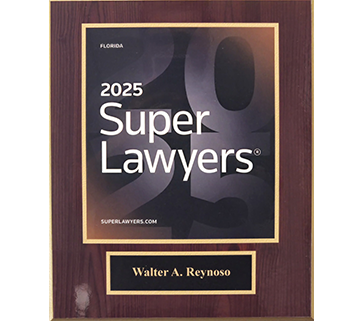
2025 Super Lawyers
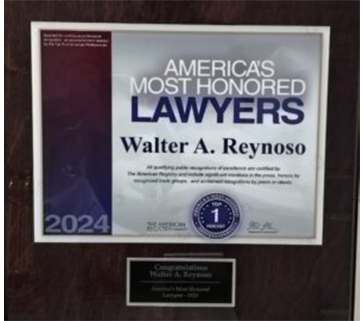
America's Most Honored Lawyers 2024
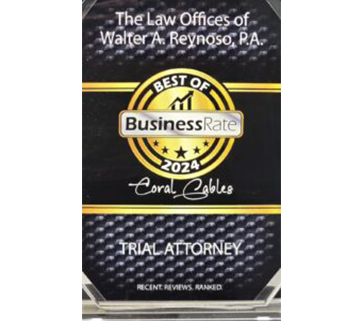
2024 Best of Business Rate Coral Gables Trial Attorney
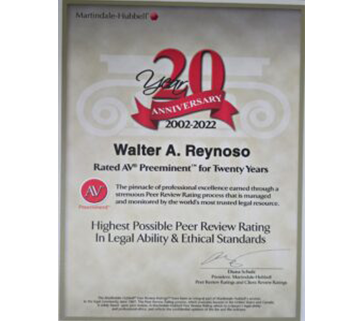
2002-2022 Rated AV Preminent for Twenty Years
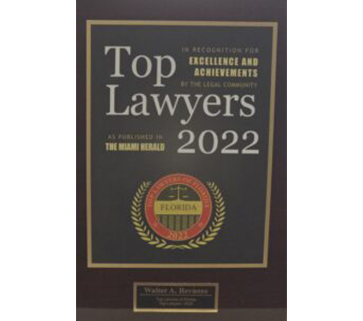
2022 Top Lawyers of Florida
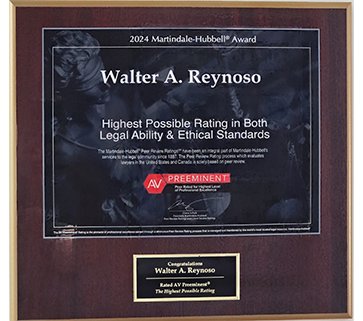
2024 Martindale-Hubbell Award Highest Possible Rating in Both Legal Ability & Etical Standards
2024 Honoree Super Lawyers Florida
Top Rated Lawyer 2022
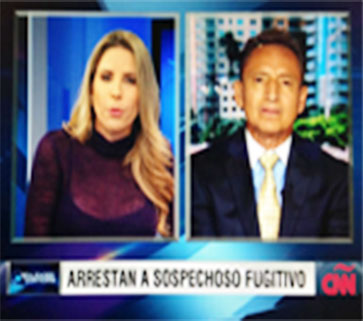
Walter Has Been A Commentator On CNN.
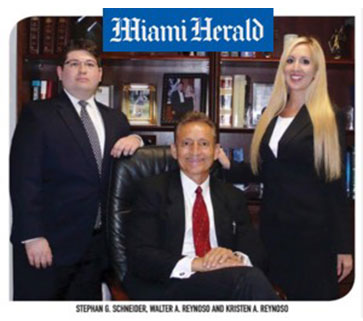
Featured in Miami Herald

